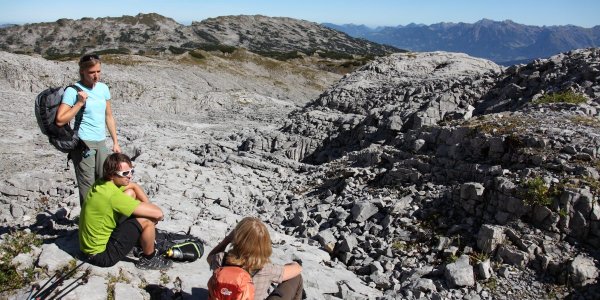
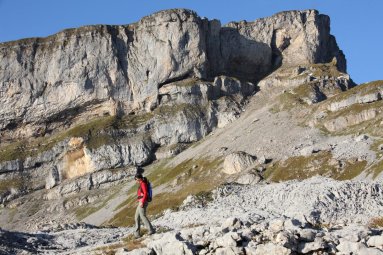
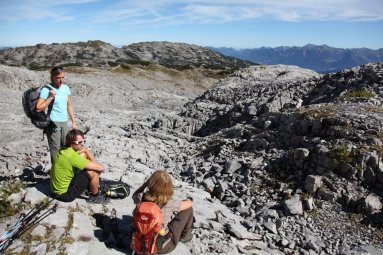
The protected karst landscape between the Hoher Ifen and the Gottesacker cliffs resembles a sea sculpted from stone and rock. Encased within the rock are the corresponding marine animals: fossilized remains of corals, sponges, snails, and mussels from a long-forgotten era. Those who look closely can also discern the dark, gleaming teeth of prehistoric fish and sharks.
Wandern auf dem Hohen Ifen. Ein Highlight des Allgäus ist das Gottesackerplateau
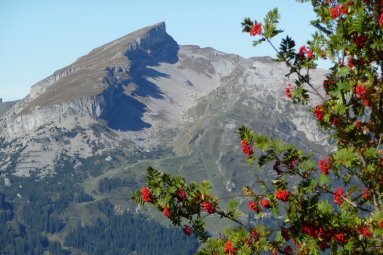
Der Hohe Ifen
Bis heute hat der Hohe Ifen seine Faszination nicht verloren und eröffnet Spaziergängern ebenso wie ambitionierten Wanderern jeweils das passende Terrain - und immer neue Ausblicke auf die umliegende Bergwelt.
Born from the primordial sea
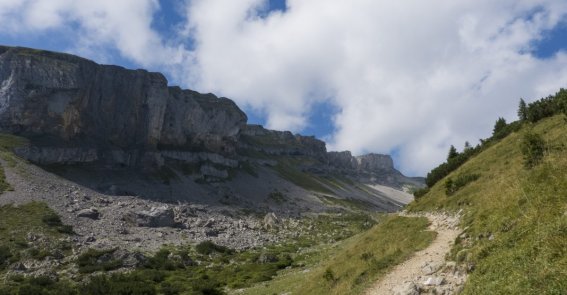
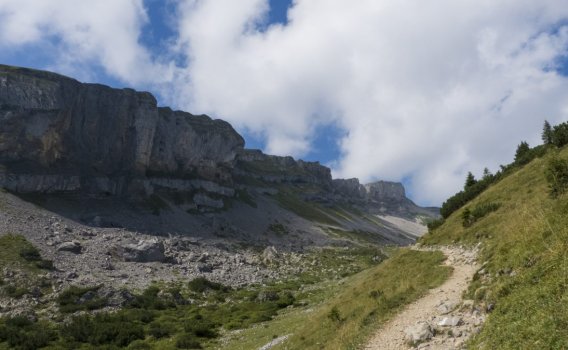
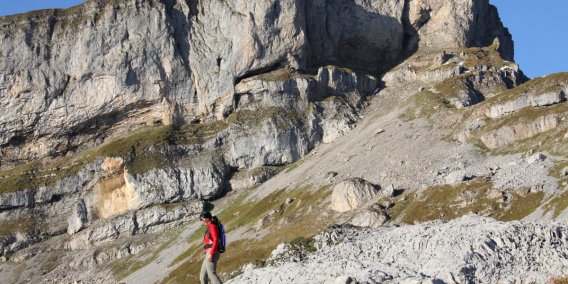
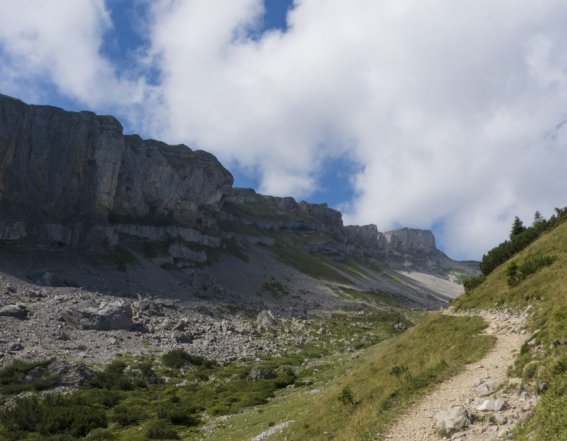
Step by step, the Roman legions made their arduous way across the Alps, for while all roads led to Rome, some cut straight through the then-unforgiving mountain landscape of the Allgäu. Maps and compasses were still a long way off for them to use for navigation. But they had another guide: the long, striking rock faces of the Hoher Ifen. Rough and gray, the rock, formed from Schrattenkalk limestone, rises majestically, having originated 120 million years ago in the shallow waters of the ancient Tethys Sea. Hidden beneath the mountain lies another, darker world: a mysterious cave system with the famous Hölloch, one of the largest and most challenging caves in Germany.


Rough paths into another time
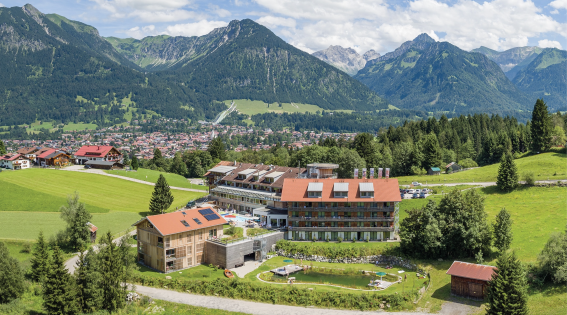
Having just hiked through lush green mountain meadows, you step almost seamlessly and unknowingly into a different, long-gone era, when few people had access to these natural giants. Paths and trails wind through this rugged landscape, away from the crowds of hikers, offering glimpses of the habitat of highly endangered animal species and a vibrant array of alpine flora that find refuge in the rocks and crevices of this craggy natural spectacle.
Experience your own journey back in time in the Allgäu Alps!
Die Sage des verfluchten Gottesackerplateaus
Einer alten Sage nach soll das Gottesackerplateau verflucht sein. Denn da, wo sich die entsetzliche Steinwüste des Ifenkar, der Gottesacker genannt, ausdehnt, befand sich einst eine schöne, sonnige Alpe mit üppigen Weiden und kostbaren Futterkräutern. Der reiche Ertrag an Käs und Butter machte aber die Sennen hartherzig gegen die Armen. Da kam einmal ein armer alter Mann in die Hütte und bat um etwas Schmalz. Der Senn nahm die dargebotene "Spatel", füllte sie voll Arglist mit Mist und strich nur oben darauf etwas Butter.
Kaum hatte der Greis aber die Alpe verlassen, bebte und toste es und die Felsen barsten. Kein Weidefleck mehr war zu sehen. Felsgeröll bedeckte die Alpe mit Mensch und Vieh, mit Steinen war sie verschüttet. Seitdem grünt kein Kräutlein mehr dort und wurzelt kein Gras; ein wildes und wüstes Hochkar ist der Gottesacker auf ewig. Viele glauben, der arme Mann sei Christus der Herr selbst gewesen.


Wandertouren auf dem Hohen Ifen
Noch wandert man durch die üppige, durch Bergfichten umrahmte Alpenflora, und plötzlich findet man sich in einer befremdliche Karstlandschaft wieder, übersäht mit spitzen Felsen und tiefen Spalten. Egal, in welchem Zeitalter Sie sich wiederfinden möchten, es ist für jeden Wanderer das Richtige mit dabei!